Internal parasites in cats: a guide to healthier everyday life
PetSmile Oran Clinic ·
Internal parasite control supports digestive health, kitten development and hygiene at home. Indoor cats also benefit from a risk assessment. Regular internal and external parasite treatments, given on a veterinary schedule suited to your cat, are a key part of preventive care.
Illustrative
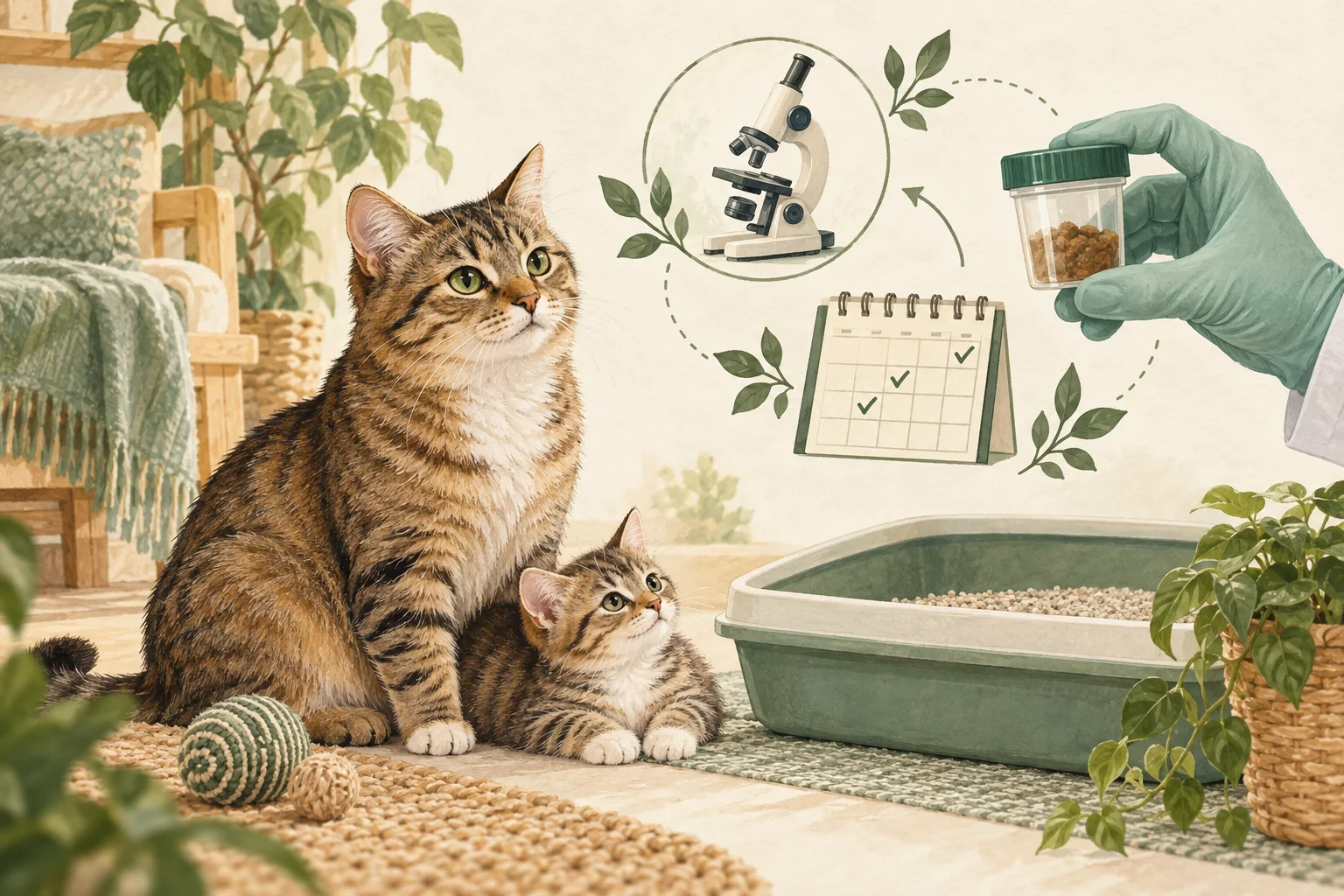
Regular treatment supports healthy development.
01 / A closer look
Internal parasites: a closer look
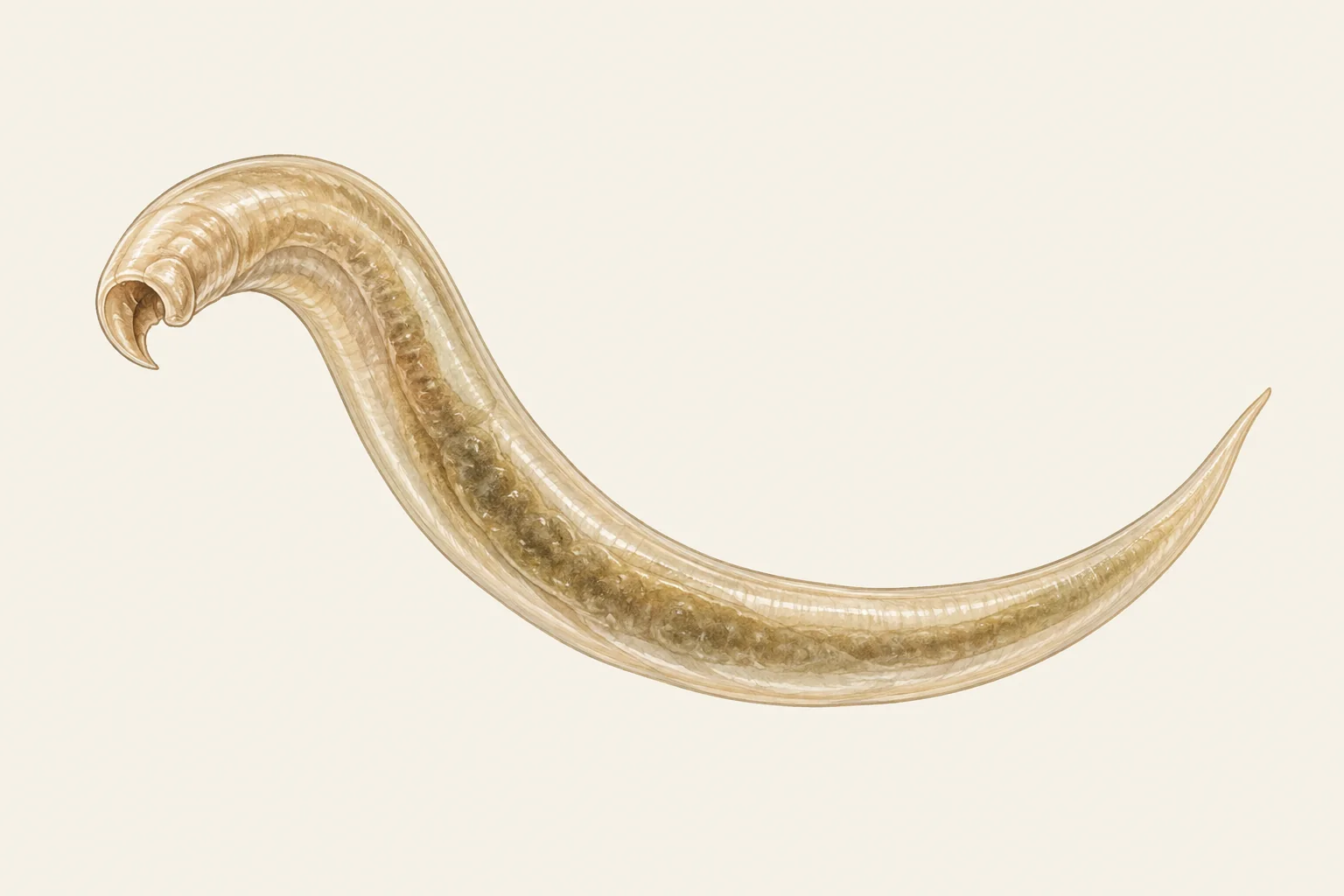
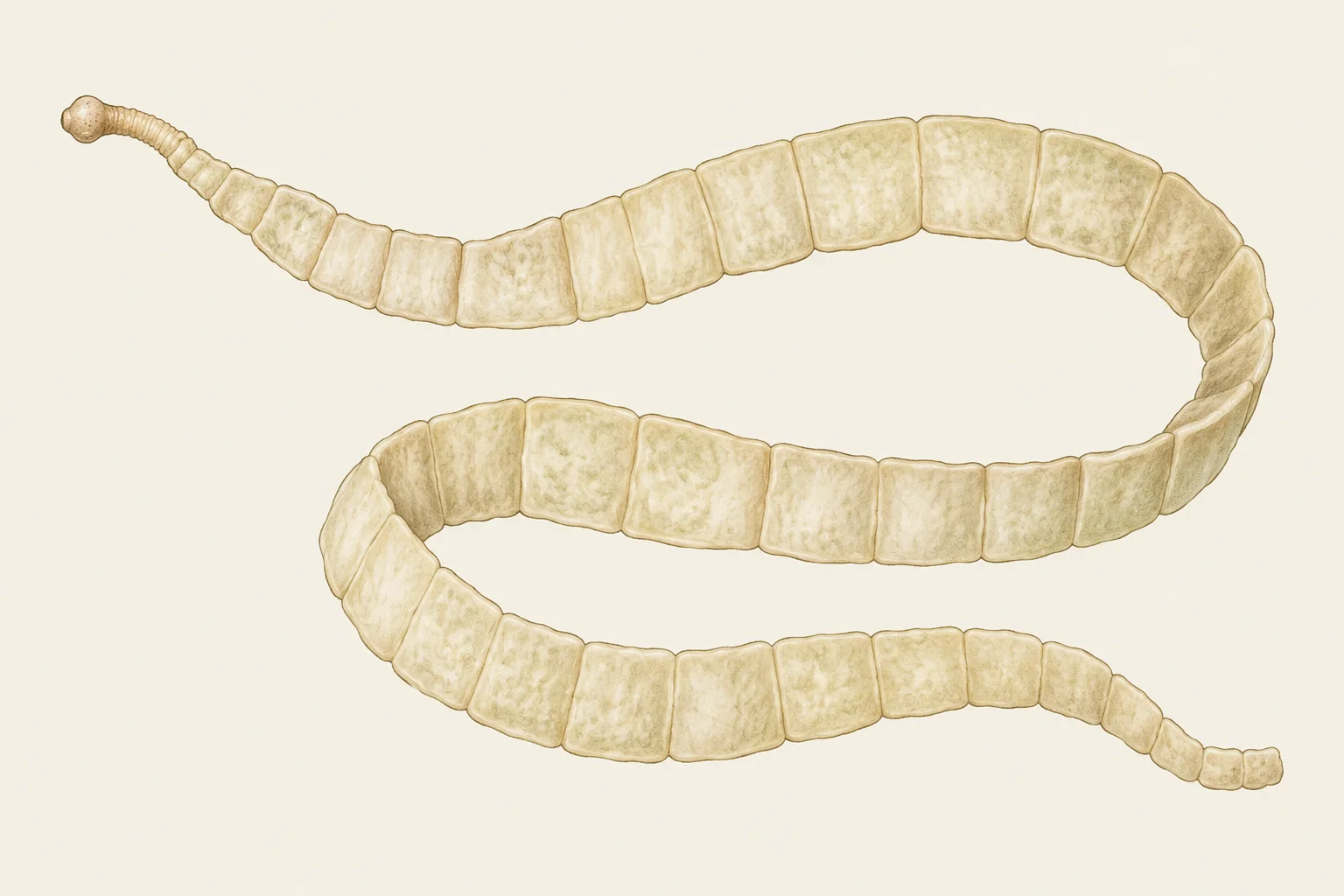
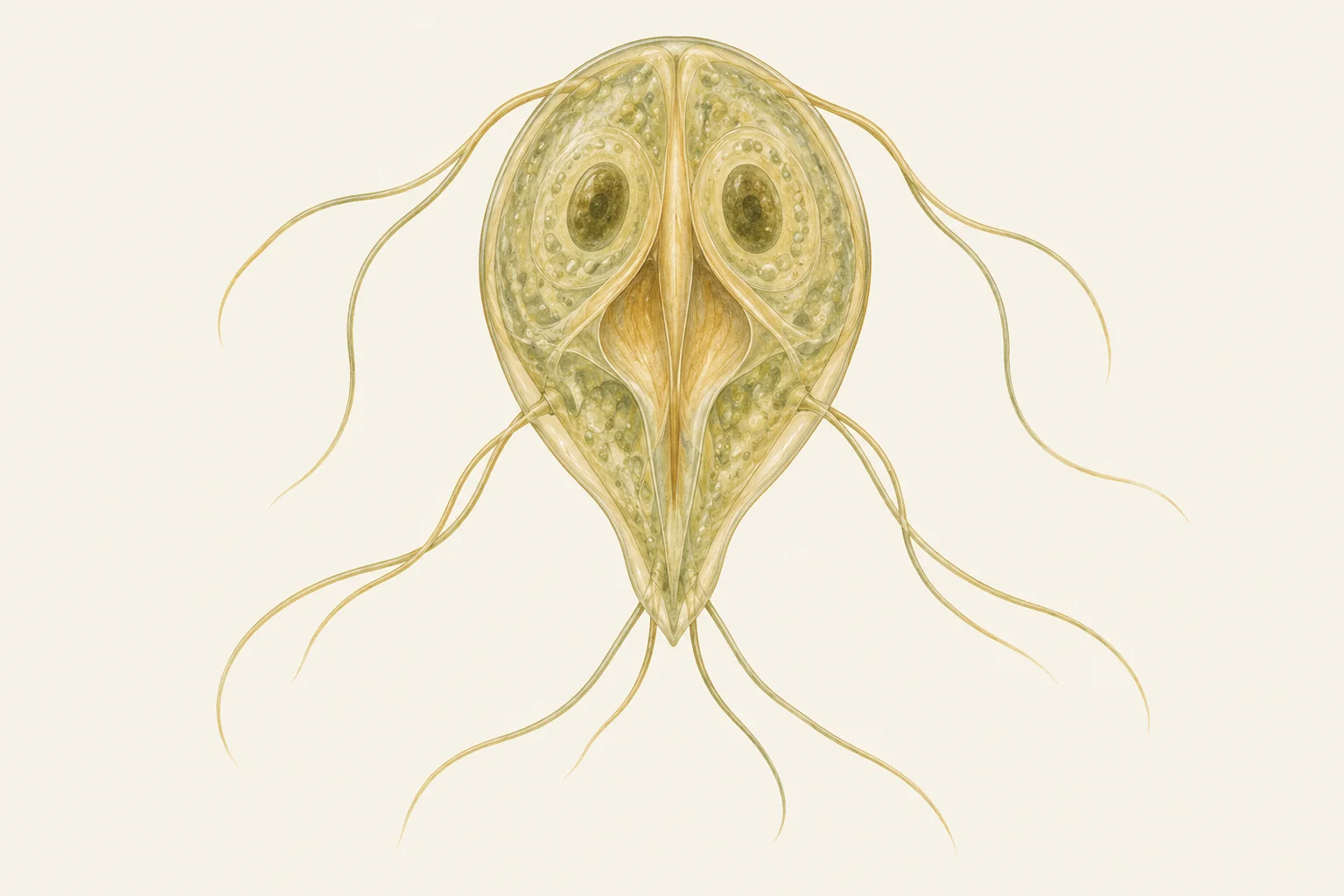
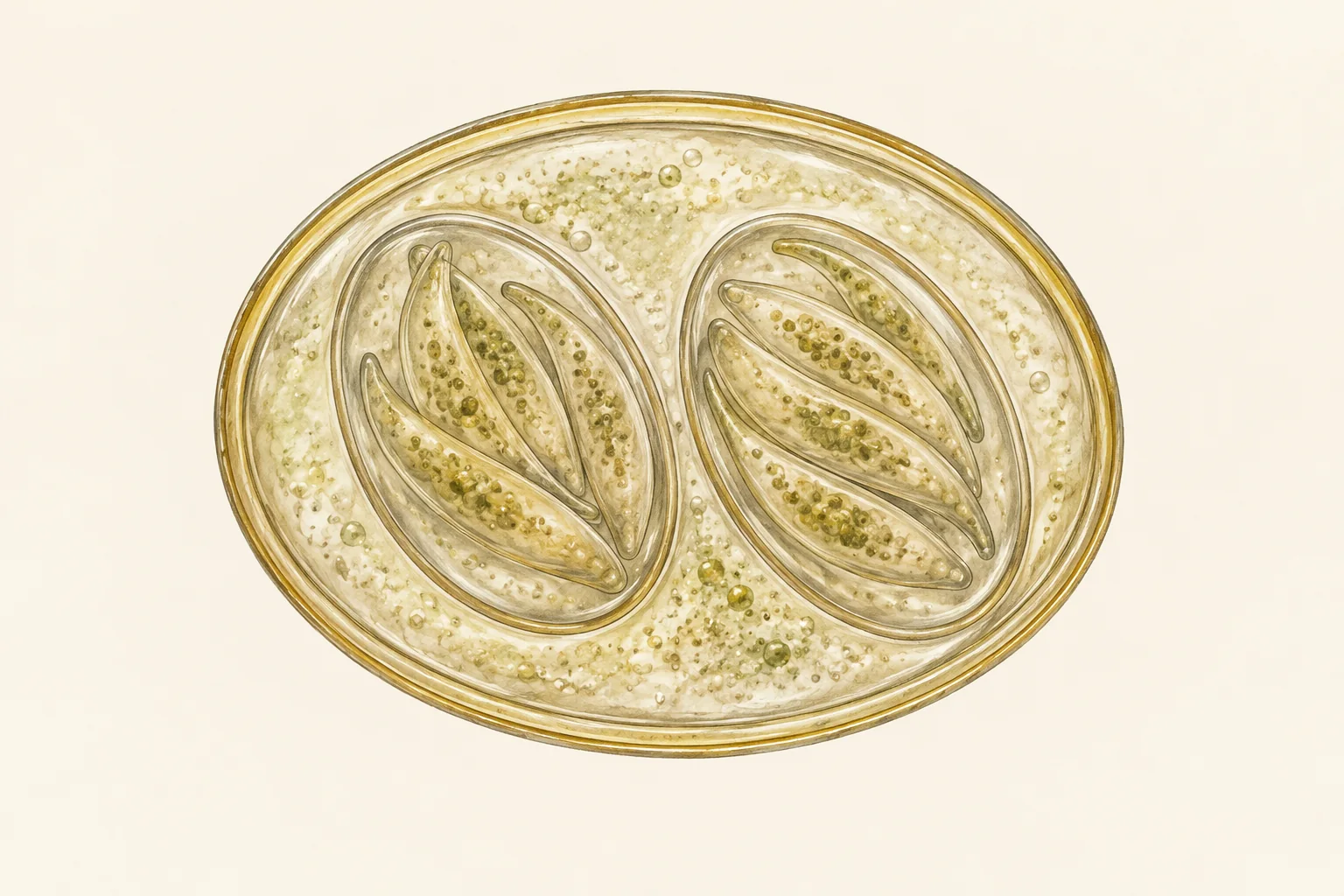
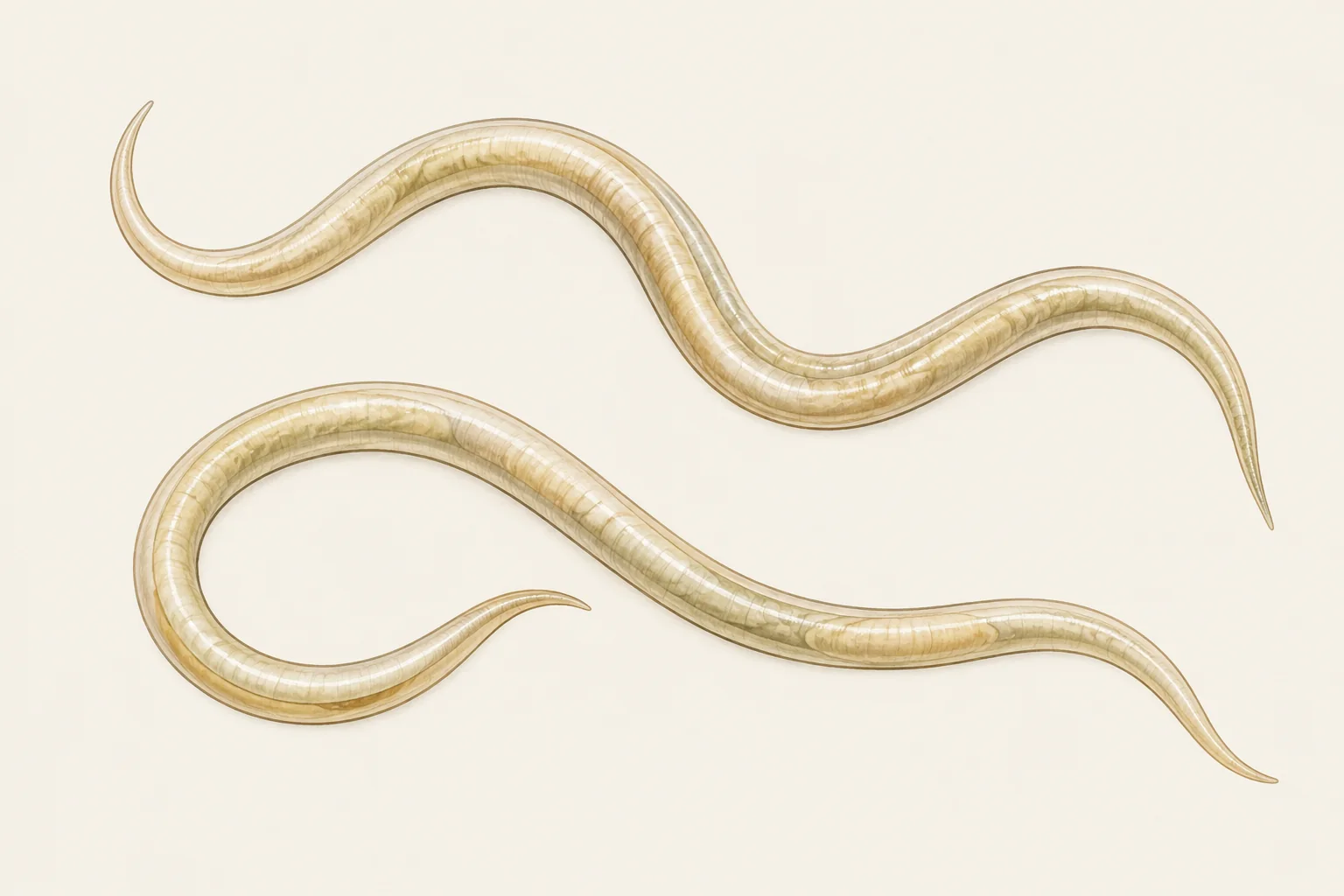
Internal parasites include more than worms. Roundworms and tapeworms live in the intestine, while Giardia and Cystoisospora are microscopic single-celled organisms. Distinguishing these groups helps us choose appropriate tests and treatment: not every digestive problem has the same cause, and one product does not cover every parasite.
Infective eggs may be swallowed from the environment or larvae acquired by eating infected prey. Toxocara cati may pass to kittens through milk; Toxocara canis may pass to puppies before birth or through milk.
What might you notice?
Young animals may develop a pot-bellied appearance or grow poorly. Infection can also occur without obvious signs.
Dipylidium is acquired by swallowing an infected flea. Other tapeworms may be acquired by eating infected prey or certain raw offal, depending on the parasite.
What might you notice?
Rice-like segments may sometimes be seen near the anus or in stools, but not all tapeworm infections are visible. Flea control and safe feeding are important.
Infective stages may be swallowed from a faecally contaminated environment.
What might you notice?
Cystoisospora can cause diarrhoea, particularly in young animals. Appropriate treatment and environmental hygiene are planned together; not every worming product covers these organisms.
Regular internal and external parasite treatment on a veterinary schedule is a core part of caring for your cat. Appropriate intestinal parasite products help control the organisms they target, while flea control reduces the risk of reinfection with certain tapeworms. Keeping to the plan before visible parasites or symptoms appear, alongside stool checks and good hygiene, strengthens preventive care.
Your vet selects the product and treatment interval according to species, age, weight, lifestyle and the product’s coverage.
02 / Everyday life
Strengthening prevention together
The environment and litter tray
Faecally contaminated surfaces, soil and shared equipment.
Prey and fleas
Some parasites are acquired through infected prey or swallowed fleas.
Early life
Maternal transmission is relevant for certain parasites.
What should we watch for?
Changes in stool consistency, recurrent vomiting, weight loss or poor kitten growth are reasons for an examination. These signs do not diagnose parasites on their own. Not seeing worms in the stool does not exclude infection.
What happens at the appointment?
We discuss feeding, hunting and previous treatments. Your vet may recommend stool microscopy, antigen tests or other investigations. No single test detects every parasite, and one negative result may not exclude infection. Ask the clinic how and when to collect a sample.
03 / Small steps
Make prevention part of everyday care
Keep internal and external parasite treatments on your veterinary schedule and record repeat dates.
Remove faeces from the litter tray daily and wash your hands afterwards.
Discuss raw feeding and hunting with your vet.
Include flea control in the plan for intestinal parasites.
Arrange a separate assessment for kittens, pregnant or nursing cats.
Do indoor cats need a plan too?
Yes. Indoor living reduces some exposures but does not remove all risk. Fleas, a new animal in the household and feeding habits can change the assessment. Treatment intervals are tailored to the cat and the product used.
When should you seek help promptly?
Call the clinic promptly for marked weakness, dehydration, bloody stools, repeated vomiting or pale gums, particularly in kittens.
04 / Your questions
Common questions
Are internal parasites the same in cats and dogs?
Some are shared, while others differ. Toxascaris leonina and flea-transmitted Dipylidium caninum can infect both cats and dogs. Toxocara cati is associated with cats and Toxocara canis with dogs; Cystoisospora species also differ by host. A shared parasite group does not mean that the same product, dose or schedule is suitable. Plans depend on species, age, weight and lifestyle.
Is parasite treatment a vaccine?
No. Parasite treatments and vaccinations are different. The organisms covered and the interval between treatments need to be assessed separately.
Can people be infected?
Some parasites have human health significance, but their risks differ. Prompt faeces disposal and hand hygiene help reduce exposure. Consult a human healthcare professional for concerns about a person’s health.
Let’s plan prevention around your pet
Let’s review your pet’s age, lifestyle and previous treatments to plan regular internal and external parasite care.

 Illustrative